What Is the ZipTie AI Search Performance Tool? Full 2026 Guide
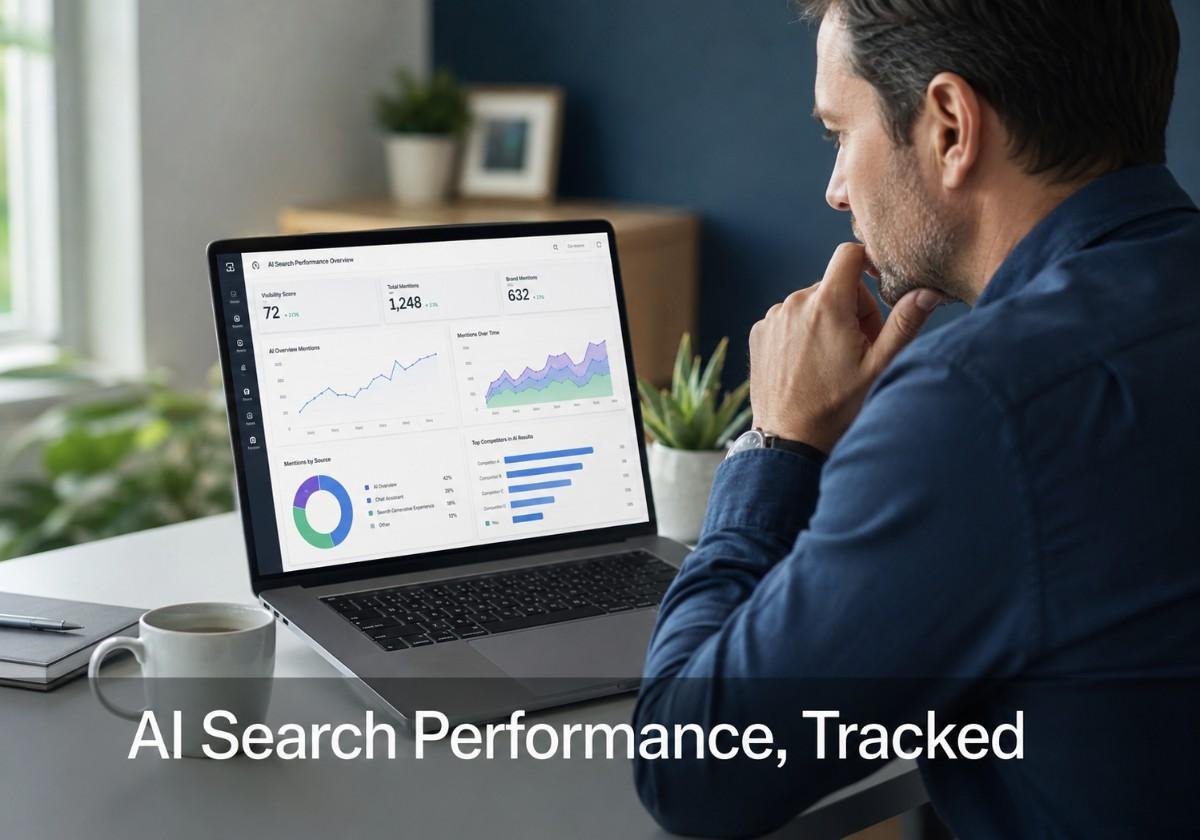
If you’ve ever ranked well on Google but still watched ChatGPT or an AI Overview, name a competitor instead of you. You already understand the problem this category exists to solve. So what is the ZipTie AI search performance tool? In short, it is a monitoring and optimization platform that tracks how often, how favorably, and how accurately your brand. Shows up inside AI-generated answers across Google AI Overviews, ChatGPT, and Perplexity, then tells you what content changes might improve that visibility.
For two decades, ranking meant climbing a page of blue links. That formula is now only half the picture. In this guide you’ll learn exactly what the ZipTie AI search performance tool does and how its tracking method actually works. What it costs in 2026, who it is genuinely built for, and how it fits alongside the SEO stack you already run. We will also cover the honest limitations, so you are not just reading a feature list dressed up as an answer.
Why AI Search Changed The Rules Of Visibility
Search behavior has shifted faster than most marketing teams have adjusted their reporting. According to research from Conductor covering nearly 22 million queries, AI Overviews now appear on roughly a quarter of all Google searches, up sharply from around 13 percent in early 2024. That is not a niche feature anymore. It is a default layer sitting on top of traditional search results, and it changes what “ranking number one” even means.
Expert note: A page can hold the top organic position and still lose the click if an AI overview answers the query directly above it, without ever naming the source.
This is the gap that gave rise to an entire category of AI search tracking tools, sometimes called generative engine optimization platforms, sometimes called answer engine optimization tools, and sometimes just described as an AI search monitoring layer. The terminology is still settling, but the underlying job is consistent: find out whether AI systems mention your brand, understand why they do or do not, and give you a repeatable way to improve that outcome.
From Ten Blue Links To One Generated Answer
The old SEO question was simple. Where do I rank? The new question is more layered. When an AI assistant answers a question in my category, does it mention me? Does it mention a competitor instead? And what did the source it pulled from actually say? Traditional rank trackers were never built to answer that, because there is no single ranked list to check. There is a generated paragraph that can change from one query to the next.
Why Traditional SEO Tools Fall Short Here
Tools like Semrush and Ahrefs remain essential for backlinks, keyword research, and organic ranking data. “Their builders simply never built them to capture what a large language model says about a brand in a conversational answer. An AI search visibility tool like ZipTie fills that exact gap, acting as a complementary layer rather than a replacement.”
What Is The ZipTie AI Search Performance Tool, Exactly
ZipTie is a cloud-based platform built specifically to monitor and improve how a brand appears inside AI-generated search results. The team behind Onely, an established technical SEO agency, created it, giving the product a credibility grounding that many newer entrants in this space lack.
At its core, ZipTie runs what its own team describes as a closed feedback loop:
- Discover the prompts and queries that actually matter to your audience
- Measure how your brand appears when those prompts are run against AI engines
- Score the visibility gaps against competitors
- Recommend specific content changes
- Re-check to confirm whether the fix actually worked
That last step, confirming whether a change worked, is the part that separates a genuine optimization tool from a simple dashboard that only reports numbers without closing the loop.
Why Choose ZipTie AI Search Performance Tool Over A Manual Process
Manually asking ChatGPT or Perplexity the same question every day and logging the answer by hand does technically work, but it does not scale, it is not consistent, and personalized results from a logged-in AI account can quietly distort what you are seeing. Why choose ZipTie AI search performance tool instead comes down to three things: consistency of checks, structured data you can actually report on, and a recommendation layer that turns raw visibility numbers into an action plan.
How ZipTie Tracks AI Search Results
This is the part most competitor content skips, and it matters more than any feature list. There are two broad ways an AI search tracking tool can capture what a chatbot or AI overview said.
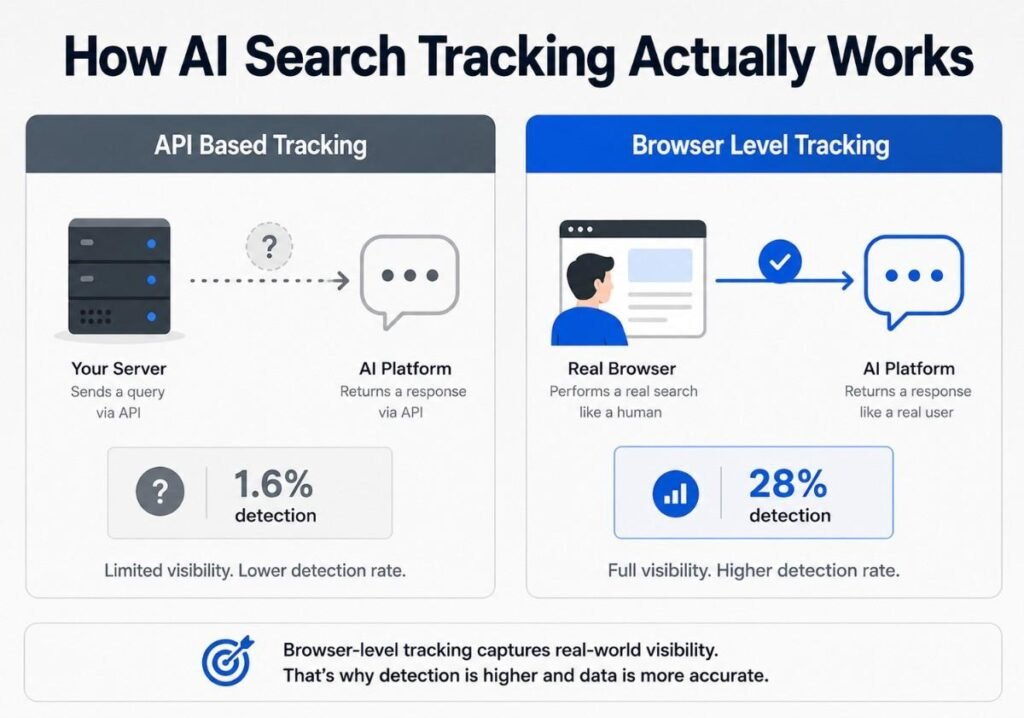
- API-based checks. The tool sends a query through a developer API and records the response. This is fast and cheap to build, but it can produce results that look different from what a real user browsing on the actual platform would see.
- Browser level checks. The tool uses real accounts and a real browser environment to run the query the way an actual person would, then captures the full response, including formatting and any screenshots.
ZipTie has publicly positioned itself around the second approach, using real browser-level sessions and real Google accounts rather than API approximations. In independent benchmark comparisons cited in third-party coverage of the tool, this method reportedly detected AI overviews on about 28 percent of tracked keywords in a test set, compared with as little as 1.6 percent detected by some API-dependent competitors on the same keyword set. That is a meaningful accuracy gap if you are making budget decisions off the resulting data.
Pro tip: Before trusting any AI search tracking tool’s numbers, ask the vendor directly whether their checks are API-based or browser-based. It is the single biggest factor in whether the data reflects reality.
Core Features Of The ZipTie Platform
ZipTie organizes its functionality into three main modules, each aimed at a different stage of the visibility workflow.
AI Search Monitoring
This is the foundation. It continuously tracks brand mentions, sentiment, citation share, and overall AI overview coverage across Google, ChatGPT, and Perplexity. You can view performance at the project level, the category level using automated tagging, or down to a single monitored query.
Content Optimization
Once a gap is identified, this module gives concrete guidance on what to add, restructure, or clarify in your content to improve the odds of being cited. This is the difference between AI search monitoring that only tells you a problem exists and a tool that also points toward a fix.
Insights And Recommendations
This layer surfaces strategic suggestions, prioritized using what ZipTie calls an AI success score, which weighs both how visible a query currently is and its likely commercial value so teams do not waste effort optimizing low-value queries first.
Supporting Features Worth Knowing
- A query discovery assistant that suggests relevant prompts automatically, so teams do not have to guess which questions matter
- An indexing health monitor, on the logic that an AI system cannot cite a page that isn’t properly indexed in the first place.
- Native Google Search Console integration, so classic click and impression data sits next to AI visibility data in one view
- Coverage across 28 countries, including the United States, Canada, the United Kingdom, Australia, and India
ZipTie Pricing Explained
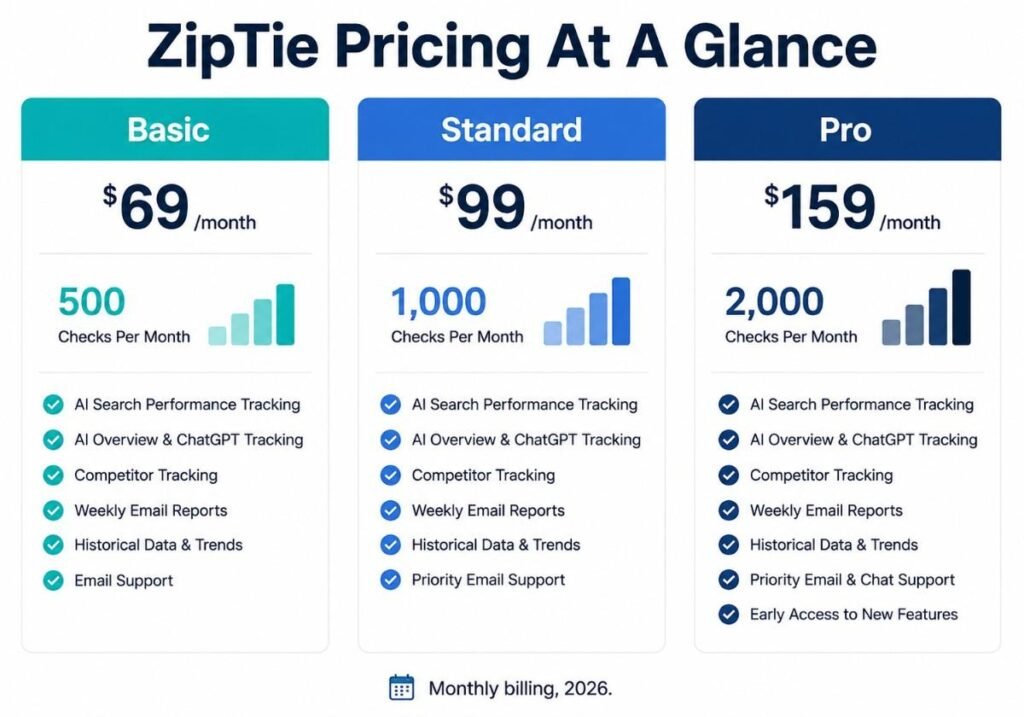
ZipTie’s price is one of the most searched details about this tool, and for good reason, since budget usually decides whether a platform gets a real trial. As of ZipTie’s published 2026 pricing page, the structure looks like this on monthly billing:
| Plan | Monthly Price | AI Search Checks | AI Data Summaries | Content Optimizations |
|---|---|---|---|---|
| Basic | $69 | 500 per month | 5 per month | 10 per month |
| Standard | $99 | 1,000 per month | 50 per month | 100 per month |
| Pro | $159 | 2,000 per month | 100 per month | 200 per month |
Annual billing brings roughly a 15 percent discount across tiers, and larger teams can request custom pricing for higher volume needs. A 14-day free trial is available and does not appear to require a credit card to start, which lowers the barrier for a first real test of the platform against your own brand.
Statistic: At the basic tier, 500 checks per month works out to roughly 16 to 17 monitored checks per day, which is enough for a small brand tracking a focused set of priority queries but likely too thin for an agency managing several client accounts at once.
Who Should Actually Use An AI Search Visibility Tool
Not every team needs this layer yet, and being honest about that is part of giving useful advice.
- Content and SEO specialists who need to understand why an AI answer does or doesn’t cite a page, not just where it ranks organically.”
- Digital marketing agencies managing multiple client brands that need competitive AI visibility benchmarking across different industries
- SaaS and IT services companies, whose buyers increasingly research vendors through ChatGPT or Perplexity before ever visiting a website
- Teams that already have a process for acting on insights, since a dashboard full of gaps is only useful if someone owns the follow-up work
If your organization is still building foundational SEO basics, such as indexing, technical health, and core content quality, traditional tools should generally come first, with AI search monitoring layered on once that foundation is solid.
ZipTie SEO Strategy: How It Fits Alongside Your Existing Stack
A common misconception is that an AI search monitoring platform replaces a traditional SEO suite. It does not, and ZipTie’s own documentation is fairly upfront about that. Tools like Semrush and Ahrefs remain the system of record for keyword research, backlink profiles, and organic rank tracking. “ZipTie adds a layer those tools can’t handle: understanding how a large language model represents a brand when it synthesizes an answer, rather than simply listing links.”
A reasonable ZipTie SEO workflow looks like this in practice:
- Keep using your existing SEO platform for technical audits, keyword research, and backlink monitoring
- Layer ZipTie or a comparable AI search tracking tool on top to monitor brand mentions and citation share inside AI-generated answers
- Feed the content optimization recommendations back into your regular content production process, rather than treating them as a separate workstream
Comparing ZipTie To The Broader AI Visibility Category
ZipTie is not the only option in this space, and the category has grown quickly through 2026. Enterprise-focused platforms such as Profound track a wider set of engines and are built for large teams with dedicated analytics needs, typically at a higher price point and often without a free trial. Mid market platforms such as PEEC AI focus heavily on agency-style reporting and competitive benchmarking. Entry-level tools such as Otter.ai are positioned as the lowest cost way to start basic monitoring for a small brand.lowest-cost
Where ZipTie tends to differentiate itself is the combination of browser-level tracking accuracy, a built-in content optimization module rather than monitoring alone, and pricing that sits in the middle of the market rather than at either extreme. The right choice ultimately depends on team size, budget, and whether you want a pure monitoring dashboard or a tool that also recommends and helps confirm fixes.
note” Comparison note“If your main need is a quick, low-cost way to see whether your brand gets mentioned at all, a lighter entry-level tool may be sufficient. If you need a closed loop between monitoring, recommendations, and confirmation that a fix worked, that’s where a platform like ZipTie adds value.”
Real World Use Case Example
Consider a mid-sized SaaS company that ranks well organically for its core product category but notices, after running manual checks in ChatGPT, that ChatGPT recommends competitors instead. Setting up ongoing monitoring surfaces, which specific prompts the brand is missing from, the content optimization module suggests adding clearer comparison content and more explicit feature statements, and a follow-up check weeks later confirms whether citation share improved. That confirmation step is what turns a one-time audit into an ongoing, defensible strategy rather than a guess.
Limitations Worth Knowing Before You Commit
No AI search visibility tool review is complete without the honest caveats.
- “AI systems often personalize generated answers, so a logged-in user may see something different from what any tracking tool reports, a limitation of the entire category, not just one vendor.” “ZipTie currently covers only Google AI Overviews, ChatGPT, and Perplexity, so brands that care deeply about Gemini or Copilot visibility will need to check whether that coverage has expanded since this guide was published.”
- Lower-tier plans have a fairly limited number of monthly checks, which can run out quickly for an agency managing several accounts
- Recommendations still require a real content team to implement them; the tool does not write or publish content on its own
Conclusion
The short answer to what the ZipTie AI search performance tool is: it’s a monitoring and optimization platform that closes the visibility gap traditional SEO tools were never designed to cover, tracking brand mentions and citations across Google AI Overviews, ChatGPT, and Perplexity. Three takeaways matter most here. First, browser-level tracking tends to be more accurate than API-based checks, and that difference should factor into any vendor comparison. Second, ZipTie’s price scales from $69 to $159 a month depending on check volume, with a 14-day free trial to test it against your own brand first. Third, this category works best as a layer on top of your existing SEO stack, not a replacement for it.
If AI-generated answers are already influencing how customers discover your category, the smartest next step is running a short trial against your own brand name and a handful of priority queries before committing to a full year of any AI search performance tool, ZipTie included.
FAQ
What does ZipTie actually track?
ZipTie tracks brand mentions, sentiment, citation share, competitive benchmarking, and full AI Overview coverage across Google AI Overviews, ChatGPT, and Perplexity. It captures the complete generated response text, not just a mention count, so teams can see the exact context their brand appears in.
How much does ZipTie cost?
Monthly pricing starts at $69 for the Basic plan, $99 for Standard, and $159 for Pro, based on the number of monthly AI search checks included. Annual billing saves roughly 15 percent, and larger teams can request custom enterprise pricing.
Is ZipTie better than traditional SEO tools like Semrush or Ahrefs?
It’s not designed to replace them. Semrush and Ahrefs remain the systems of record for keyword research and backlinks, while ZipTie adds a dedicated layer for tracking how AI systems represent a brand in generated answers a job those older tools weren’t built to do.
Who built ZipTie, and can it be trusted?
The team behind Onely, a long-established technical SEO agency, built ZipTie, which gives the product credibility grounded in real SEO practice rather than a purely AI-hype-driven origin.”
Does ZipTie work outside the United States?
Yes, ZipTie currently supports AI search checks across 28 countries, including the United States, Canada, the United Kingdom, Australia, Germany, and India, with more regions added as AI search adoption grows.
What is the difference between SEO and AI search optimization?
Traditional SEO focuses on ranking a page within a list of organic search results. AI search optimization, sometimes called generative engine optimization, focuses on whether and how a brand is mentioned inside a synthesized AI-generated answer, which follows different rules around citation and source selection.
Can I track AI search visibility manually without a paid tool?
Partially. You can manually run branded prompts across ChatGPT and Perplexity and log results by hand, and Google Search Console shows some AI Overview impression data. Consistent, repeatable share of voice measurement across all three platforms generally requires a dedicated tool.
Is the free trial worth using before buying ZipTie?
Yes, particularly because AI-generated answers vary by account and session. A 14-day trial run against your own brand name and a handful of priority category queries is the most reliable way to judge accuracy before committing to a paid plan.