
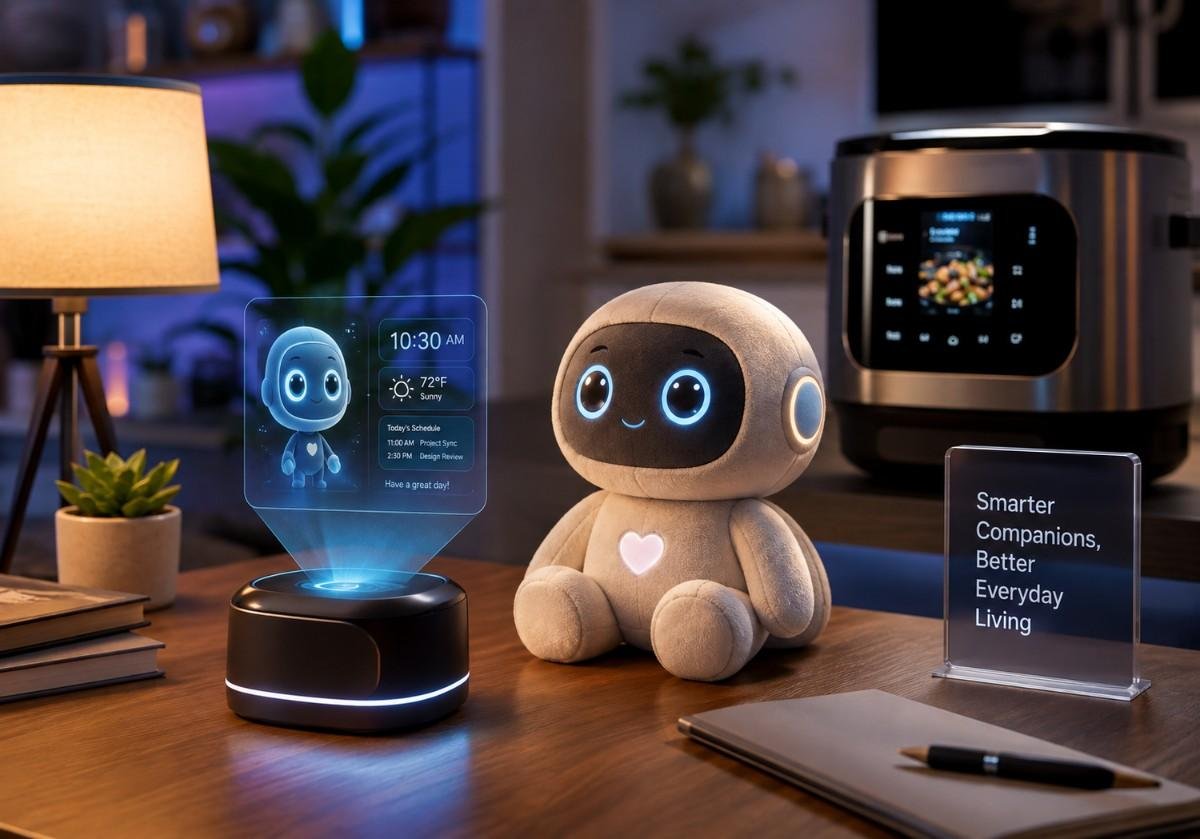
New AI Gadgets 2026 You Didn’t Know Existed
The number is almost annoying to say out loud: the global market for consumer-facing AI products is on track to hit roughly $153 billion in 2026. One year. That’s it. And most people scrolling past these gizmos on a Tuesday morning have no idea half of them exist.
This guide covers the new AI gadgets 2026 actually produced—not the five products every other blog already beat to death by February. You’ll get unique AI gadgets 2026 buyers are quietly obsessing over, a rundown of the weird AI gadgets list pulled from this year’s trade shows, and a rough-and-ready framework for telling real innovation apart from a marketing gimmick wearing a chip.
By the end you’ll know what actually counts as an AI gadget, which categories are producing the wildest stuff, roughly what things cost, and how to shop without getting fleeced by the latest AI inventions of 2026.
What Actually Makes a Gadget an AI Gadget in 2026
Not everything with a chip inside deserves the label. Slapping “AI” on the box doesn’t make it one. A real AI gadget processes information, learns patterns, and shifts its own behavior without you manually reprogramming it every single time. That’s the bar. Most products still trip over it.
On-Device Processing Is the New Standard
A lot of this year’s futuristic AI devices run a language model—sometimes a small, oddly specialized one—right on the hardware, instead of phoning home to the cloud for every little decision. Less lag. Works without Wi-Fi. And, on top of that, more of your personal data just… stays put, on the device, instead of drifting off to some server farm you’ll never see.
Why 2026 Feels Like a Turning Point
Market analysts have been watching the consumer AI space grow from around $118 billion in 2025 to roughly $153 billion this year, with smart home and IoT gear leading the charge as the fastest-growing chunk of the pie. That growth spurt is exactly why so many innovative AI tech products are landing on shelves faster than retailers can restock them.
Statistic: Smart home and IoT devices now make up close to 38 percent of the consumer AI products market in 2026—easily the single largest category of new releases this year.
Unique AI Gadgets 2026 You Probably Missed
Every January, Las Vegas turns into a fever dream of prototypes and product demos. A handful of 2026 debuts genuinely caught even jaded tech reporters off guard. Genuinely.
The Musical Lollipop
Lollipop Star built an edible gadget — yes, edible — that uses bone conduction to pipe a licensed song through your skull while you eat it. Candy meets a tiny audio device. Strange? Absolutely. But it’s also a pretty perfect snapshot of how far companies will stretch the word “gadget” this year.
The Panda Companion Robot
Mind with Heart Robotics rolled out An’An, a panda-shaped robot packed with distributed sensors and emotional intelligence software. It reacts to touch and voice, and it’s built specifically to keep older adults company, nudging them with gentle reminders throughout the day.
The AI-Powered Ice Maker
GoveeLife launched the Smart Nugget Ice Maker Pro. A countertop appliance that predicts freezing cycles and quietly adjusts itself before the compressor gets loud — no more midnight rattling. It cranks out up to 60 pounds of ice a day, and it retails for around $499.99, according to trade show coverage.
Pro tip: Hunting for the weirdest releases first? Search specifically for January trade-show announcements. That’s consistently where the year’s strangest, most newly trending AI gadgets surface before they ever hit wider retail.
AI Companions and Emotional Robots Are Having a Moment
Robotic companions were everywhere in 2026. Everywhere. And they’re one of the clearest signs that AI hardware is drifting from purely functional tools toward something more emotional, more social—a little needier, honestly.
Holographic Desk Assistants
Razer’s Project AVA started life as a simple esports coaching tool. Now it’s grown into a small animated holographic companion that sits on your desk, helps you stay productive, and offers up casual small talk when you’re procrastinating anyway. Users pick between different animated characters, each with its own expressive face and lip-synced chatter.
Plush Robots With Real Intelligence
SwitchBot’s Kata Friends line looks, on the outside, like a soft stuffed animal you’d win at a carnival. On the inside? An on-device language model paired with a cloud-connected vision model, letting it recognize a person’s mood and respond in real time. A weird side effect is how many adults, not kids, end up buying these for themselves.
Why This Category Keeps Growing
Analysts tracking official CES programming note that companion robotics and emotionally aware devices have expanded every single year since 2023—driven largely by older adults living alone and younger users craving low-pressure social interaction without the whole “actual human” complication.
Smart Kitchen and Home Devices Get Genuinely Clever
Kitchens and living rooms remain the proving ground for practical AI hardware. And 2026 brought a wave of appliances that quietly do more thinking on your behalf than you probably want to admit.
Predictive Appliances
Beyond the ice maker mentioned above, several kitchen brands introduced ovens and coffee machines in 2026 that track usage patterns and adjust settings on their own—cutting wasted energy, cutting manual guesswork, and cutting that 6 a.m. fumbling with dials.
Interoperability Finally Improves
A growing share of new smart home AI devices now ship with support for the Matter connectivity standard. Translation: gadgets from different manufacturers can finally work together under one app, instead of forcing five separate apps onto a household that just wants the lights to turn on.
Household Robots With Multiple Jobs
Some 2026 releases double as both a cleaning tool and a general household assistant. Computer vision lets them navigate a home while also handling small side tasks—following a pet around, flagging unusual activity, that sort of thing.
Futuristic AI Devices for Everyday Comfort and Wellness
Not every release chases the spotlight. A quieter, less flashy category of 2026 gadgets is all about comfort, health, and daily convenience — no press conference required.
Wearables That Actually Learn
New wearables released this year track sleep, movement, and stress patterns, then adjust their recommendations over time instead of repeating the same canned advice every single morning. Wait, there’s also a growing subset that learns your specific stress triggers—not generic “you slept badly” alerts, but patterns tied to your actual routine.
Personal Mobility Gets an AI Boost
Devices like Strutt’s ev1 personal vehicle blend mobility assistance with AI-powered navigation, giving people more independence while quietly adapting to how they actually move through their day.
Everyday Convenience Devices
Several smaller accessories launched in 2026—AI-powered translation earbuds, compact home assistants—focus purely on smoothing out daily friction rather than reinventing an entire product category. Small stuff. It adds up.
Expert note: The most successful gadgets in this category rarely photograph well. Their value shows up in small, repeated moments—not a single dramatic headline feature.
Comparison Table: New Trending AI Gadgets at a Glance
| Gadget | Category | Standout Feature | Best For |
|---|---|---|---|
| An’An Panda Robot | AI Companion | Emotional intelligence, touch response | Older adults, companionship |
| Project AVA | Holographic Assistant | Animated character, productivity help | Desk workers, gamers |
| Smart Nugget Ice Maker Pro | Smart Kitchen | Predicts and prevents noisy freezing cycles | Home entertaining |
| Kata Friends | Plush Companion Robot | On-device LLM plus mood recognition | Comfort-seeking users |
| AI Wearables (2026 wave) | Wellness Tech | Adaptive health recommendations | Daily health tracking |

How to Spot Real Innovation Before You Buy
With so many latest AI inventions in 2026 hitting shelves at once, a simple filter saves both money and regret.
Ask what problem it actually solves. A genuinely useful AI gadget fixes a specific, repeated frustration. If the main selling point is “it has AI” — full stop, nothing else — that’s usually a red flag, not a feature.
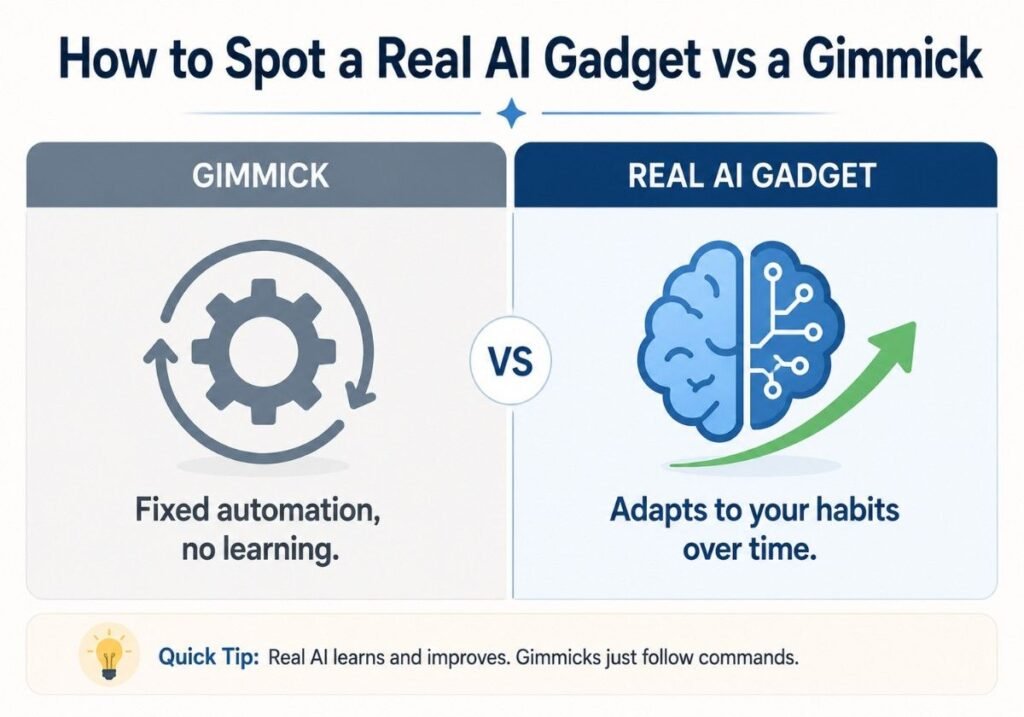
Check for real learning, not just automation. True AI hardware adapts based on your habits over time. A device running a fixed script, no matter how the marketing dresses it up, is closer to a regular smart gadget than an AI one.
Compare before you commit. Sites tracking Droven IO’s new gadgets in 2026 and similar release trackers are genuinely useful for comparing specs and prices across brands before settling on one product—especially in fast-moving categories like companion robotics.
Comparison note: A basic smart plug reacts only when told to. A true AI gadget from this year’s lineup notices patterns and adjusts on its own. That’s the core difference buyers should actually look for.
For a wider view before you spend anything, browsing listings under Droven IO new gadgets 2026 alongside official CES recap coverage remains one of the fastest ways to separate the products with staying power from short-lived novelty items.
Conclusion
The new AI gadgets of 2026 have produced a range from genuinely practical to delightfully weird, and honestly, both ends deserve attention. Three things matter most here: real AI hardware adapts to your habits instead of just automating one fixed task, the smart home and wellness categories currently hold the most durable value, and comparing your options before buying saves both money and regret. Every time.
Pick one category that solves an actual problem in your routine—a smarter kitchen appliance, a wearable that finally gives feedback worth reading, whatever fits. The new AI gadgets 2026 market is moving fast, and the buyers who do a little homework upfront are the ones still using their gadgets a year from now. Not the ones with a drawer full of regret. For more comparisons before you buy, Droven IO’s new gadgets 2026 listings are worth a look.
Frequently Asked Questions
What are the newest AI gadgets in 2026?
The newest releases span AI companion robots, predictive smart kitchen appliances, holographic desk assistants, and adaptive wearables. Many debuted at CES 2026 and are gradually reaching retail shelves throughout the year, with smart home devices representing the largest single category of new products overall.
Are AI gadgets actually useful or just a trend?
Some genuinely are, especially wearables and smart home devices solving repeated daily frustrations. Others — novelty companion gadgets, mostly — lean harder toward entertainment and comfort than pure usefulness. It really comes down to whether the device adapts to your habits or simply automates one fixed routine over and over.
What is the weirdest AI gadget released in 2026?
The musical lollipop from Lollipop Star, using bone conduction to play a song through your skull while you eat it, is widely considered one of this year’s strangest releases—right alongside AI-powered pets that evolve through app-based interaction over time.
How much do new AI gadgets cost?
Prices swing wildly by category. Smart kitchen appliances with AI features typically run $300 to $600. Companion robots and wearables range from under $100 for simple accessories up to several hundred dollars for advanced, on-device-processing models with real learning built in.
Will AI gadgets work with my existing smart home setup?
Many 2026 releases now support the Matter connectivity standard, which improves cross-brand compatibility considerably. Still worth double-checking a product’s listed compatibility before buying, though — not every AI gadget on shelves has adopted the standard yet, even this late in the year.
What AI gadget trends should I watch for later in 2026?
Expect continued growth in companion robotics, wider Matter adoption across smart home devices, and wearables shifting from simple tracking toward genuinely adaptive, personalized recommendations built on long-term behavior patterns — not just a daily step count.