

The Truth About Drovenio AI for Business 2026
Search “Drovenio AI for Business” and you’ll land on four or five articles that all sound weirdly alike. Same automation buzzwords, fuzzy talk about “smarter decisions.” The same thing is missing from every single one: no pricing page, no signup button, and no actual screenshot anywhere. If that struck you as odd, it should have.
Drovenio AI for Business isn’t something you install or log into. It’s a phrase attached to Droven.io, a site that writes about artificial intelligence and automation. It doesn’t sell any. Below, we’ll walk through where this mix-up started, why it keeps getting copied across the web, and more usefully, how to check whether any AI tool is real before your business spends time or money on it.
What Drovenio AI for Business Actually Is
Most pages ranking for this term won’t say it plainly, so let’s just say it.
Droven.io is a content and knowledge site. It covers artificial intelligence, cloud computing, automation strategy, and digital transformation for a business audience. Nothing publicly available suggests it’s a Software as a Service (SaaS) company selling a product called “Drovenio AI.”
A real B2B product would typically have:
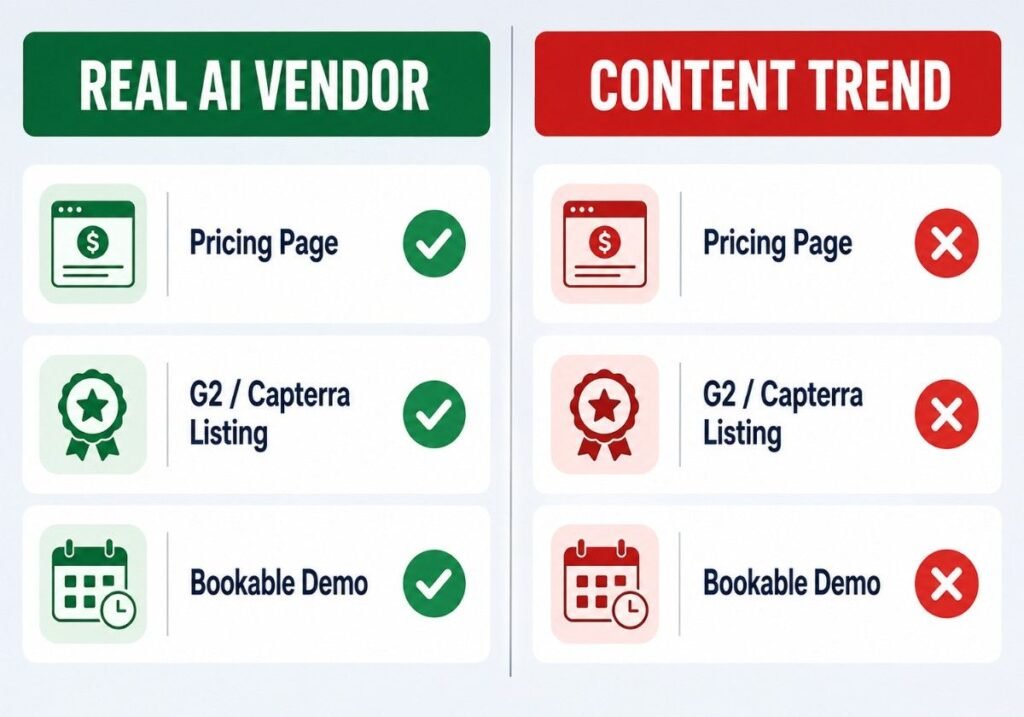
- A public pricing page
- A demo request form
- A listing under its own name on G2 or Capterra, the two places most buyers check first
- Verifiable case studies, a team page, or API documentation
None of that shows up here. That’s not a minor omission; it’s basically every signal a legitimate software company puts front and center.
What likely happened is fairly mundane. A phrase tied to an editorial brand got picked up by writers who assumed or hoped readers would assume it named an actual product. One site ran with that framing, and others copied the structure because that was easier than checking the premise first.
Why So Many Near-Identical Articles Exist
This is the part most guides skip, and honestly it’s the more useful half of the story.
In early-to-mid 2026, a cluster of lower-authority sites began describing “Drovenio AI for Business” as something you could actually deploy feature lists, use cases, the works none of it independently checkable. The pattern across these pages was almost too consistent:
- Generic “benefit” lists with no source behind any of them
- Vague claims about automation and predictive analytics
- Zero screenshots, zero documentation, zero product
There’s a name for this in SEO circles. A phrase starts trending, maybe from a real but tiny product, a rebrand, or plain confusion, and a wave of sites rush to publish before anyone bothers checking what the term actually refers to. The goal isn’t informing the reader. It’s claiming the search result before a competitor does.
Google addresses this directly. Its spam policies describe scaled content abuse as producing large volumes of unoriginal content that adds little value to users, regardless of how it was made. Google has also called out the practice of building separate pages for every search variation purely to manipulate rankings. You can read the full policy on Google Search Central.
So if several sites describe the same “product” in suspiciously similar wording, with none of them linking to a real company that’s worth a second look. It isn’t proof anything real exists.
How to Spot a Real AI Vendor Versus a Content Trend
Not every unfamiliar AI name is fake, to be fair. Legitimate startups launch quietly all the time, often before their marketing catches up. What separates them from a content trend is evidence and how consistently that evidence shows up across independent sources.
| Signal | Real AI Vendor | Content Trend / Unverified Name |
|---|---|---|
| Pricing page | Publicly listed or available on request | Absent or never mentioned specifically |
| Review platforms | Listed on G2, Capterra, or similar with real user reviews | No listing found under the name |
| Product demo | Bookable demo or live trial | Vague “contact us” language only |
| Company info | Team page, funding history, or LinkedIn presence | No verifiable company behind the name |
| Source diversity | Coverage from varied, independent outlets | Nearly identical articles from low-authority sites in a short window |
| Documentation | API docs, integration guides, changelog | No technical documentation exists |
Businesses generally expect an AI platform to automate repetitive work, support complex decisions, and analyze data at scale. That’s exactly why vague claims,, ones that never name a specific, checkable capability, deserve a raised eyebrow rather than trust.
A decent rule of thumb: if a name fails three or more checks on that table, don’t build a purchase decision or a piece of content on the assumption it’s legitimate.
What Real Business AI Adoption Looks Like in 2026
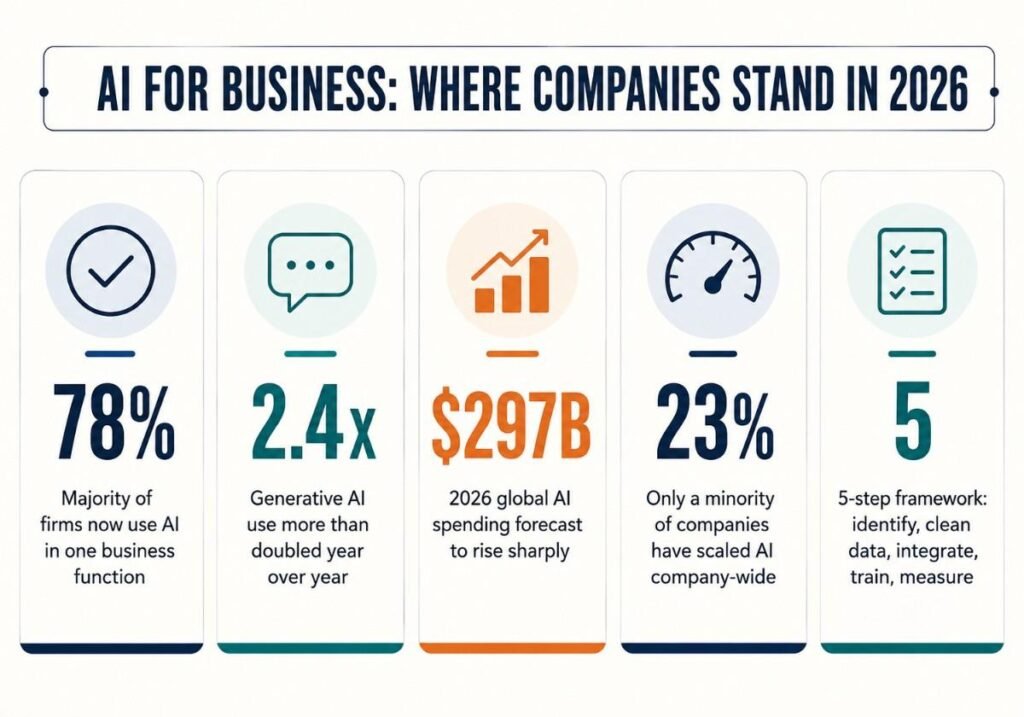
Set the Drovenio confusion aside for a second. Artificial intelligence has genuinely become part of how companies operate. Businesses are dealing with more data, more tasks, and more competitive pressure than before, and that pressure is real whether or not any single trending name holds up under scrutiny.
Real, checkable AI-for-business tools tend to fall into a few buckets:
- Workflow and task automation: routing tickets, generating routine reports, and moving data between systems. The good ones plug into your existing stack instead of demanding you rebuild it.
- Data analysis and forecasting: spotting patterns in sales, churn, or inventory data and turning them into forecasts a team can act on.
- AI-assisted decision support built on large language models. Work from companies including OpenAI, Anthropic, and Google has shown these systems can understand context, summarize information, and assist with knowledge-heavy tasks, and more business tools are now built on top of those capabilities rather than from scratch.
For a broader picture, Wikipedia’s overview of AI in industry covers adoption across manufacturing, finance, healthcare, and retail from predictive maintenance to fraud detection. It’s a large, established field. Not a single trending product name.
One distinction worth keeping in mind: a useful category description and a fabricated product claim usually differ in specificity. “AI predicts future outcomes from historical data” describes a category. “Drovenio AI predicts which products will sell more next month” is a specific claim that needs a verifiable source, and here, none exists.
A Practical Checklist Before You Adopt Any AI Tool
Before you commit to budget, data access, or workflow changes to any AI platform, familiar name or not, run through this:
- Verify the company independently. Look for a LinkedIn page, a registered business entity, or press coverage from outlets you already trust.
- Check review platforms directly. Search the name on G2 and Capterra rather than trusting review widgets embedded on the vendor’s own site.
- Ask for a real demo, not a sales call. A legitimate product can show itself working. A slide deck can’t.
- Ask how data is handled. Where does it live? Who can access it? What happens if you cancel?
- Check integration compatibility. Does it connect with what you already use, or does it require a rebuild?
- Read outcome claims skeptically. Be cautious of any vendor promising specific percentage gains without showing the methodology behind them.
- Pilot small first. Test with one team or workflow before rolling anything out company wide.
Where This Pattern Shows Up Beyond Drovenio
Drovenio isn’t a one-off, and it won’t be the last name like it. Loosely defined AI product names tend to surface in waves, usually riding on a real industry trend: agentic automation, AI-assisted analytics, or whatever’s hot that quarter that writers then attach to a specific brand without doing the legwork to verify it.
Apply the same checks from this guide any time a new AI name shows up repeatedly in your search results within a short window, especially if the articles about it read like they were built from the same template.
Conclusion
Three things worth taking away here. “Drovenio AI for Business” is not a deployable software platform; it’s an editorial term tied to a content publisher, and the wave of near-identical articles calling it a product reflects a familiar search content pattern, not a real launch. Verifying a vendor takes minutes, not hours: a pricing page, a G2 or Capterra listing, and a real demo tell you almost everything. And genuine AI adoption for business is happening at real scale across automation, data analysis, and decision support without needing you to chase every trending name that crosses your feed.
If you’re evaluating AI tools for your business right now, run through the checklist above before you commit a single workflow to a platform you haven’t checked yourself.
FAQ
Is Drovenio AI for Business a real software platform?
No. There’s no public pricing page, product demo, or listing on review platforms like G2 or Capterra under that name. Droven.io, the site the term is tied to, publishes editorial content about AI and automation rather than operating a deployable software product.
What is Droven.io?
Droven.io is a content and knowledge platform covering artificial intelligence, automation, and digital transformation for business readers. It’s an editorial resource, not a SaaS company with a product to sign up for.
How do you know if an AI tool is legitimate?
Check for a public pricing page, a listing with real reviews on G2 or Capterra, a bookable product demo, and independent coverage from more than one source. If a name fails several of these checks, treat it as unverified.
Why do so many websites publish the same AI product articles?
Some publishers copy a working content structure once it starts ranking, without verifying the premise behind it. Google’s spam policies specifically address this under what it calls scaled content abuse.
What should I check before adopting an AI platform for my business?
Verify the company independently, confirm real reviews exist, request a live demo, ask about data security, and check integration compatibility with your existing tools before rolling anything out company-wide.
What is scaled content abuse in Google Search?
It’s a Google spam policy targeting content generated primarily to manipulate search rankings rather than help users regardless of whether it was written by humans, automated tools, or a mix of both.