How to Get Poetry Published: 99% Get Rejected
Ask an editor at a small literary journal what their acceptance rate looks like during an open reading window, and brace yourself. Low single digits. Sometimes lower. That’s the number hiding behind every search for how to get poetry published, and it’s why so many writers close the tab more confused than when they opened it. Here’s the part nobody says out loud: publishing poetry isn’t some locked vault. It’s a process. Messy, slow, learnable.
Maybe you’ve typed “How do I get a poem published?” into a search bar at 1 a.m., half-convinced your poems aren’t good enough to bother sending anywhere. Stop right there. Every published poet currently listed in a journal’s contributor notes once sat exactly where you’re sitting—blinking cursor, blank submission form, zero credits to their name.
So here’s the plan. Prepping poems so they survive an editor’s red pen. Where to send poetry once they’re ready. How journals actually decide yes or no behind closed doors. What a full collection takes. And the mistakes — the dumb, avoidable ones — that get manuscripts trashed before a human even finishes reading them. Get through this and you’ll have a real answer for how to publish poetry, not a vague gesture toward “just submit stuff.”
This guide reflects standard practices used across literary journals and the submission databases poets rely on, including Poets & Writers and Submittable.
Understanding How Poetry Publishing Works
chasing one credit. A whole manuscript. It doesn’t matter which you’re chasing—how to publish poetry boils down to the same three things every time. Write something strong. Point it at the right market. Actually send it. That’s it. Behind most literary magazines sits a skeleton crew, often unpaid, often reading submissions on a lunch break or after the kids are asleep.
The Editorial Pipeline
Your poem doesn’t leap from inbox to “accepted.” A reader — one overworked human with a stack of forty submissions and a cup of cold coffee — flags what stands out. That gets bumped to a genre editor. Then, maybe, to the editor in chief for the final word. You don’t need to dazzle everyone in that chain. Just survive each round without getting cut.
Reading Periods and Response Times
Journals don’t sit open all year, waiting. Most run on Windows—fall, then spring again, with a dead stretch through summer. And the wait? Anywhere from two weeks to eight brutal months at the bigger names. Tracking those windows, watching the poetry windows as some poets call it, sounds tedious. It is. Do it anyway.
Simultaneous Submissions
Plenty of journals let you send the same poem to five places at once. Fair enough. But the second one says, “Yes, you pull it everywhere else.” Immediately. No exceptions, no “I’ll get to it later.” Check the guidelines first, though—not every journal plays this way.
How to Prepare Your Poems Before You Submit
An editor knows within three lines whether a poem got revised or just typed and shipped the same night.
Revise Beyond the First Draft
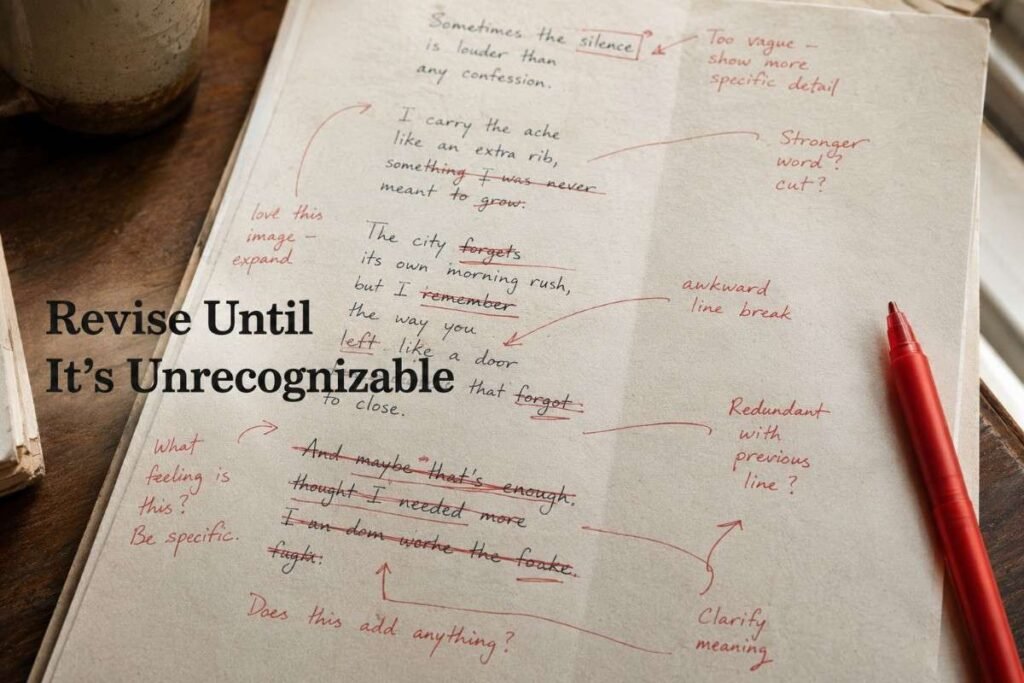
That poem you finished at midnight, feeling like a genius? Read it again next week. Out loud, ideally, maybe pacing around your kitchen. Anything limp gets cut. Anything there just to fill space is gone.
Format Your Manuscript Correctly
Twelve-point font. Times New Roman, usually; nothing wild. Contact info is placed correctly depending on whether the journal reads blind. A layout that doesn’t scream for attention unless the guidelines say otherwise.
Build a Short, Honest Bio
Two sentences. Maybe three. Third person. Mention a recent publication if you’ve got one. If not? A plain, honest line about who you are does the job. Editors care about the poems on the page, not your résumé.
Comparison Table: Where New Poems Typically Get Sent First
| Submission Type | Typical Wait Time | Simultaneous Submissions | Best For |
|---|---|---|---|
| Small online journals | 2 to 8 weeks | Usually yes | First-time submitters |
| Established print journals | 3 to 6 months | Often, yes. | Poets with a few credits |
| Prestige national magazines | 4 to 8 months | Sometimes | Established poets |
| Themed anthologies | 1 to 3 months | Usually yes | Poets writing to a theme |
| Poetry contests | 2 to 6 months | Rarely | Poets seeking prizes |
Where to Send Poetry: Best Places to Submit
Where can I submit poetry? The question that stalls out even determined writers, mostly because there are thousands of active markets and zero master lists that cover them all.
Literary Journal Databases
Poets & Writers runs a searchable database you can filter by genre, fee, reading period, or whatever you need. Once you’re submitting on a regular basis, a tracker like Submittable or Duotrope stops being optional and starts being the only thing keeping your spreadsheet honest.
Genre-Specific and Themed Magazines
Formal verse. Spoken word. Nature writing is dense with moss and dirt. Whatever your lane is, some scrappy little magazine out there is built entirely around it. A themed journal already wants what you’re writing—that’s half the battle won before you even hit submit.
Contests and Anthologies
University presses and scrappy nonprofits run poetry contests constantly, dangling publication and sometimes actual prize money. Anthologies work well too, especially if you’re circling one subject—grief, a specific street corner, identity, whatever’s consuming you lately. Wikipedia’s list of literary magazines is a solid place to start hunting.
Online and Social Platforms
Some poets build a following first — a scrappy Instagram account, a YouTube reading filmed in a bedroom — before chasing anything traditional. Fine strategy for an audience. Doesn’t replace an actual journal credit, though. Not even close.
How to Submit Poetry the Right Way
The poem matters. So does everything around it.
Read the publication first
Editors say this constantly, and they’re right every time. Two or three back issues will teach you more about a journal’s actual taste than any guidelines page ever could. Skip this step and you’re just guessing.
Follow Every Guideline Exactly
Font. Poem count. File type. The exact subject line wording, down to capitalization. Miss one and plenty of journals reject it on the spot—automatically, before a human even opens the file.
Submit in Small, Strategic Batches
Three to five poems, typically. Pick ones that talk to each other somehow — shared tone, shared thread — instead of tossing in whatever happens to be finished that day.
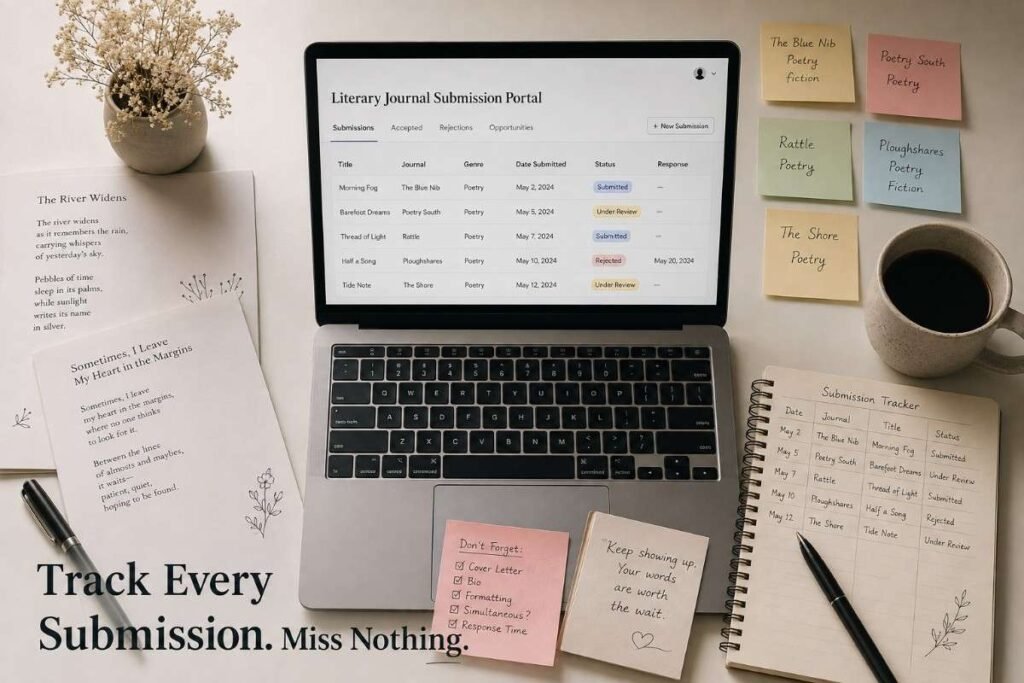
Track Every Submission
Spreadsheet. Notebook. Duotrope. Doesn’t matter which, just log where each poem went and what came back. Skip this, and you’ll double-submit by accident or miss the pattern staring you in the face.
How to Get Published as a Poet with a Full Collection
Individual poems in journals usually come first. The chapbook, the full collection—that’s the second act, not a separate story.
Chapbooks vs. Full-Length Collections
Twenty to thirty pages for a chapbook. Forty to eighty for a full-length collection. A lot of poets treat the chapbook like a dress rehearsal before the bigger show.
Building a Track Record First
Presses take bigger swings on poets who already have credits stacked up somewhere. Every accepted poem is proof — small, but real — that your work lands with strangers, not just people who already like you.
Small Presses vs. Self-Publishing
Independent presses often run open periods or contests, and they’ll usually handle editing and distribution as part of the deal. Self-publishing hands you the wheel entirely—which sounds great until you realize editing, design, and marketing are now also your job.
Common Mistakes That Get Poetry Rejected
Good poems get rejected constantly for reasons that have nothing to do with how good they are.
Ignoring Submission Guidelines
The number one cause of an instant no. Guidelines exist because editors are drowning in submissions. Skipping them reads as disrespect, whether that’s fair or not.
Submitting to the Wrong Fit
Sending sprawling free verse to a journal built on strict, rhymed formalism? Nobody wins there. Not you, not the overworked reader who has to say no.
Giving Up After One Rejection
Rejection isn’t the exception. It’s the entire game. Even poets with decades of credits behind them collect stacks of no’s for every single yes. The difference between the ones who eventually get published and the ones who quit? Persistence. Paired with actual revision, not stubbornness alone.
Conclusion
Three things, really. Poems that got genuinely revised, not just glanced at twice. Real research into where to send poetry so your style actually fits the room. And the willingness to keep going after the rejections pile up—because they will. Every published poet got there one accepted poem at a time, usually buried under a mountain of no’s first.
How to get published as a poet has less to do with raw talent than people assume. It’s persistence paired with strategy—a boring answer, maybe, but the true one. Pick your strongest poems. Find three journals that actually fit. Send something out this week. Not next month.
FAQ: People Also Ask
How do I get a poem published for the first time?
Read a few issues of small or online literary journals first. Then send three to five polished poems that match their style. First acceptances usually come from the smaller, scrappier markets—not the big names.
Where can I submit poetry for free?
Most journals skip reading fees entirely, though some contests charge one. Poets & Writers and Submittable both let you filter for free-only options.
How long does it take to hear back after submitting poetry?
Two weeks at a small journal. Up to eight months at a bigger one. Wildly different, so track each journal’s typical window and adjust your expectations accordingly.
Can I submit the same poem to multiple journals at once?
Yes — if the journal allows it. And the moment one says yes, pull it from everywhere else. Fast.
How many poems should I include in one submission?
Three to five, generally. Pick ones that complement each other instead of grabbing whatever’s finished.
What is the difference between a chapbook and a full poetry collection?
Twenty to thirty pages versus forty to eighty. Many poets use the chapbook to build a portfolio before attempting the longer project.
Do I need an agent to publish a poetry collection?
No. Most poetry collections go straight to small and independent presses through open submissions or contests. No middleman required.
How many rejections should I expect before getting published?
More than feels reasonable. Even poets with a long publication history rack up far more no’s than yeses. Showing up, again and again, matters more than any single response.