How to Publish a Poetry Collection: The Ultimate Guide
Most poetry presses in the US reject well over ninety-five percent of what lands in their inbox. Read it again if necessary. That’s quite a hard number, and if you’ve ever Googled “how to publish a poetry collection” at 1am when you were trying to figure out if your book of poems with your name on it was ever going to be a book with a spine, you’ve probably got a reason to wonder. You are not alone in this, and you don’t have to know yet if anything is wrong.
You’ll learn how to craft a manuscript that won’t crumble at the hands of an editor; how to get a poetry book published—both traditionally published and self-published; why journals and contests are more important than people realize; and how to publish a poetry book without sanding down the parts of your voice that make it yours. Stick with it. There’s a lot here, but there’s nothing complicated once you look at the shape.
Understanding Your Publishing Options
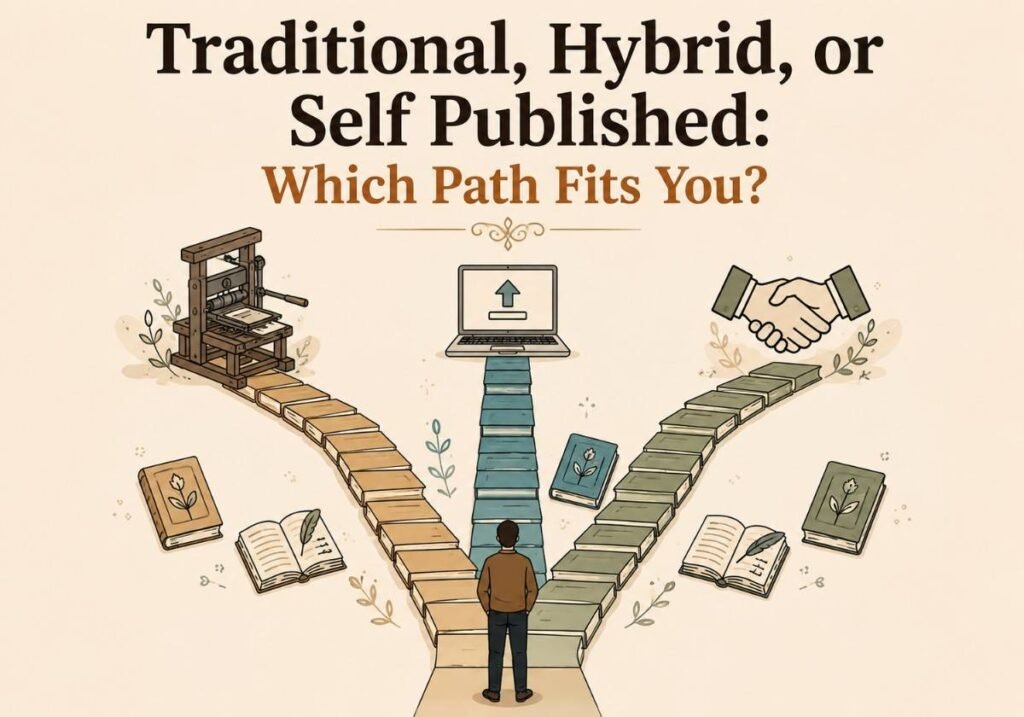
Here’s the thing nobody tells you upfront: how to publish a poetry collection isn’t one path. It’s three, and picking the wrong one wastes years. I read submissions for a small press for a while, and I watched genuinely good manuscripts get rejected over and over, not because the poems were weak but because the poet aimed at the wrong door. Wrong door, right poems. Happens constantly.
Traditional Publishing Through Small Presses
Forget the Big Five. Poetry in America mostly lives with small independent presses, places like Copper Canyon, Graywolf, and BOA Editions. They run open reading periods, sometimes contests, and if they take you, they cover the editing, the design, and the printing. You get royalties. What you give up is time and control.
Self-Publishing
This one’s fast. You format it, you design the cover, you push it live through Amazon KDP or IngramSpark, and it’s out in the world on your terms. Bowker, the outfit that tracks US ISBN registrations, once clocked self-published print and ebook titles at 1.68 million in a single year. That’s not a niche anymore. Poetry rides that wave too.
Hybrid Publishing
Somewhere in the middle. You pay for professional support, editing, design, and distribution, but you keep more rights and a bigger cut of royalties than most traditional deals offer.
Comparison Table: Publishing Paths for Poets
| Publishing Model | Upfront Cost | Creative Control | Typical Timeline | Royalty Range |
|---|---|---|---|---|
| Traditional Press | None to low | Limited | 12 to 24 months | 8% to 15% |
| Hybrid Publisher | Moderate to high | Shared | 6 to 12 months | 20% to 50% |
| Self-Publishing | Low | Full | 1 to 6 months | 35% to 70% |
Preparing Your Poetry Manuscript
Doesn’t matter which road you pick. The manuscript has to be ready first. This is where most poets rush, and it’s usually why the rejection comes back fast.
Choosing a Theme or Arc
Editors can smell a random pile of poems from a mile off. What they want is intention. So ask yourself, what’s actually holding this thing together? Grief, place, a childhood house that doesn’t exist anymore—whatever it is, it is. Name it.
Ordering Your Poems Strategically
Order isn’t an afterthought; it’s half the reading experience. Open strong. Something accessible, something that pulls a reader in without asking too much yet. Then build; let things get messier, more vulnerable, and harder to sit with. End on something that either resolves or leaves a question worth carrying.
Editing and Revision
Read every poem out loud. Actually do it; don’t skip this. Cut whatever repeats a feeling you’ve already nailed somewhere else in the book. And get another editor’s eyes on it if you can, because you’ve stared at these poems too long to see them clearly anymore. In my own editing work, the manuscripts that got dramatically better were always the ones where the poet agreed to cut their favorite piece because the book didn’t need it. Painful. Worth it.
On top of writing well, you now also have to prove you can sell books. Feels unfair. It’s the reality anyway.
Publishing in Literary Journals First
Before you send a full manuscript anywhere, get individual poems into journals, Poetry Magazine, The Sun, Rattle, or whatever fits your style. A cover letter with a solid list of credits tells an editor other people already vouched for this work. That matters more than it should, but it matters.
Entering Poetry Contests
The Yale Series of Younger Poets. The National Poetry Series. These aren’t just prestige plays; they’re literally how a lot of poets land their first book deal. Even placing as a finalist opens doors a cold submission never would.
Growing an Online Presence
Instagram, Substack, or wherever you post short poems or behind-the-scenes notes. Publishers now ask about follower counts and email lists during submissions. Wait, actually, they ask about this a lot more than poets expect. Start building it before you think you need to.
How to Get Poetry Book Published Through Traditional Presses
Chasing how to get a poetry book published the traditional way? There’s a rhythm to it, and it’s more knowable than it looks from the outside.
Researching the Right Presses
Not every press takes unsolicited work. Use Poets & Writers, use Duotrope, and find presses that already publish something close to your style. Don’t waste a submission fee guessing.
Writing a Compelling Cover Letter
Keep it short. Say why you picked that specific press, list your real credits, and skip the urge to summarize the whole manuscript. Editors read hundreds of these. Clear beats clever, every time.
Understanding Contest Fees and Reading Periods
Most poetry presses only take submissions through paid contests, usually twenty to thirty dollars a pop. Reading periods can be a two-week window once a year. Blink and it’s closed. Mark the calendar.
Self-Publishing Your Poetry Collection
If speed and control matter more to you, how to publish a poetry collection on your own terms is genuinely doable with the right setup.
Formatting for Print and Digital
Poetry is weird to format because line breaks aren’t decoration; they’re meaning. Use Vellum or Adobe InDesign, something that keeps your breaks intact across print and e-readers both. A misplaced line break can wreck a poem nobody meant to wreck.
Choosing a Distribution Platform
Amazon KDP has the reach. IngramSpark gets you into actual bookstores and libraries, which matters if “Amazon only” isn’t the dream you had for this book.
Comparison Table: Popular Self-Publishing Platforms
| Platform | Best For | Print Cost Model | Distribution Reach | Royalty Rate |
|---|---|---|---|---|
| Amazon KDP | Speed and reach | Print on demand | Amazon only for wide reach | 60% ebook, variable print |
| IngramSpark | Bookstores and libraries | Print on demand | Global wholesale network | 45% to 60% |
| BookBaby | Full-service support | Package pricing | Multiple retailers plus own shop | 100% net on direct sales |
Designing a Professional Cover
Poetry readers judge on sight, whether we admit it or not. Hire someone who actually knows the genre. A generic template cover will cost you browsers before they ever read a single line.
Marketing and Promoting Your Published Poetry
The book existing isn’t the finish line. It’s the starting gun. Traditional or self-published, marketing decides whether anyone finds it at all.
Hosting Readings and Launch Events
Bookstores, libraries, and that coffee shop with the good acoustics—they usually welcome local poets. These events build real community, and real community talks.

Leveraging Book Reviews
Ask poetry bloggers for honest reviews on Goodreads or Amazon. A book with a visible review history tends to convert browsers into buyers more reliably than one with none, though exactly how much varies by genre and platform. Reviews are social proof, plain and simple.
Using Social Media Strategically
Short video, oddly enough, works for poetry. YouTube’s full of poets reading their own lines, and that traffic actually flows back to the book. A weird side effect of a format nobody expected to help poetry, but here we are.
You can also learn more about the history and evolution of poetry publishing on Wikipedia and browse real writer discussions about the submission process on Quora.
CONCLUSION
Three things to walk away with. Get the manuscript genuinely ready before you send it anywhere. Build credibility through journals, contests, and a real audience, even a small one. And pick the path, traditional, hybrid, or self-published, that actually fits your timeline and how much control you need to keep.
Your poems deserve to be read by someone other than you. That’s really what this whole guide comes down to. Whether you land with a respected small press or you build the thing yourself from the ground up, the path’s a lot clearer now than it was when you started reading. So start on the manuscript. Today, not next month.
FAQ SECTION
How do you publish a poetry book without an agent?
You don’t need one, honestly. Submit directly to small presses during open reading periods, or enter a recognized contest. Agents mostly work in prose because poetry sales rarely cover their commission. Direct submission is the norm here, not the workaround.
How long does it take to publish a poetry collection?
Traditional routes run twelve to twenty-four months from acceptance to shelf. Self-publishing can wrap in weeks once your manuscript, cover, and formatting are locked. Hybrid sits in between, usually six to twelve months.
How many poems should be in a published collection?
Forty to eighty poems is the usual range, landing around forty-eight to eighty pages. Chapbooks run shorter, under thirty poems typically. The real answer depends on how much content your theme can actually support.
Do I need an MFA to get poetry published?
No. Plenty of published poets have one, sure, but publishers care about the writing and your journal credits far more than a degree. Don’t let the lack of one stop you.
What is the difference between a chapbook and a full collection?
A chapbook is short, usually under thirty pages, and often works as a stepping stone toward a full collection. A full collection stands alone longer, and it’s typically the stronger debut if your ambitions are bigger than a sampler.
Can I publish poetry for free?
Yes. Self-publishing through Amazon KDP costs nothing upfront unless you pay for editing or design. Traditional submissions are usually free too, aside from occasional contest fees running twenty to thirty dollars.